
A 19-Year-Old Surgical Scar Transformed: How Microchanneling Is Changing the Approach to Scar Revision
March 2026 | Procell Therapies
|
"At EastWest Microneedling, we approach scar revision through an integrative lens. Rather than focusing on creating more trauma in the skin, we consider how to support a more complete healing response. Our Integrative Microneedling Method looks beyond the surface, incorporating whole-body support alongside targeted treatments, recognizing that true skin repair is influenced by both internal and external factors. Microchanneling is one of the tools we use within this process, helping to guide the skin toward improved structure and function over time." Diana & Amelia |
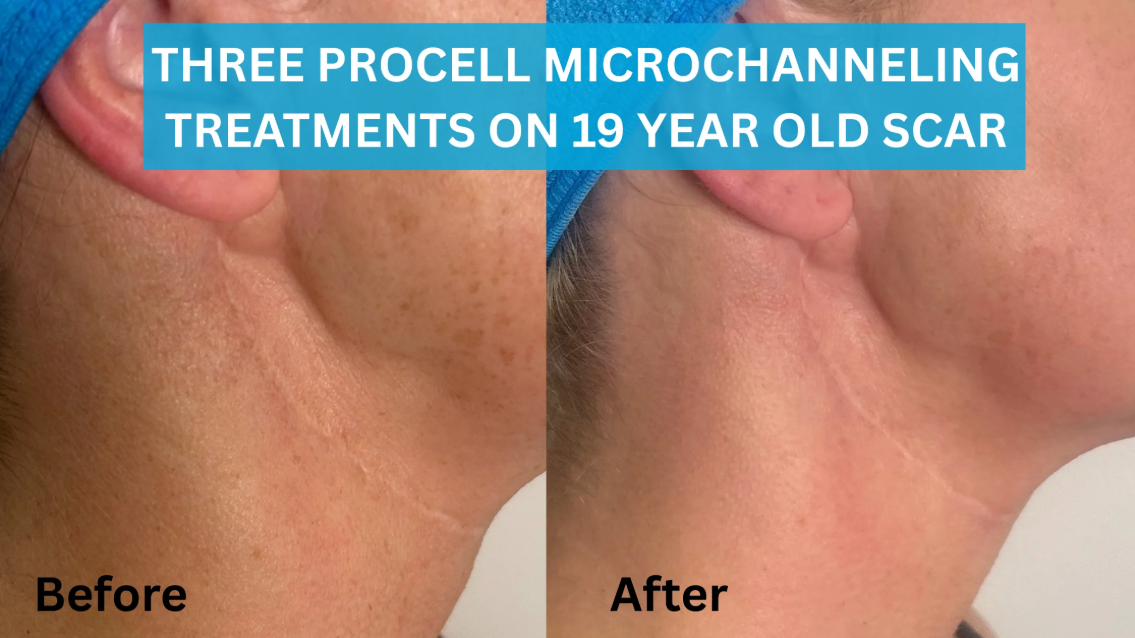
When Terri came to esthetician Claire Brokloff with a surgical scar nearly two decades old, she wasn't expecting much. After all, conventional wisdom says old scars are permanent. If they haven't faded by now, they never will.
That thinking, it turns out, misses something fundamental about how scars work and what it actually takes to improve them.
Here's what most people don't realize: a scar isn't just damaged skin. It's evidence of dysregulated healing. When the body experiences trauma (whether from surgery, injury, or accident) stem cells travel to the wound site and release growth factors. These are the signaling proteins that orchestrate tissue repair. When that process doesn't complete properly, we're left with a scar.
The promising news? That healing pathway doesn't close permanently. Even 19 years later, the right signals can reignite the body's repair mechanisms and guide the skin toward more normalized tissue. Growth factors essentially remind the skin how to heal correctly, picking up where the original process stalled.
Many people struggling with stubborn scars have tried everything, including expensive laser treatments, with disappointing results. The common frustration of "I've tried all the most advanced treatments and nothing works" often stems from a fundamental misunderstanding of what scar revision requires.
Most aggressive treatments operate on the premise that causing controlled injury will prompt the body to heal better the second time around. But here's the key insight: scar revision isn't about injuring the skin well enough. It's about HEALING the scar well enough to improve its appearance.
Traditional microneedling, for instance, creates trauma across the treatment area in hopes the body will regenerate improved tissue. But this approach has limitations, particularly as we age. Stem cell counts naturally decrease over time, and with them, our capacity for robust healing. The result? We're asking an aging body to heal not only the scar but also all the additional trauma from the treatment itself.
Procell Microchanneling takes a different approach. Rather than maximizing injury, it minimizes trauma while maximizing the healing response.
The microchanneling device creates precise vertical channels in the skin. Just enough to open pathways for absorption without causing unnecessary damage to surrounding tissue. Immediately following the treatment, growth factors are applied topically, flooding the microchannels and delivering those crucial signaling proteins directly where they're needed.
This combination (minimal controlled entry points plus concentrated growth factors) allows the body to direct its healing resources toward actually improving the scar rather than recovering from treatment trauma.
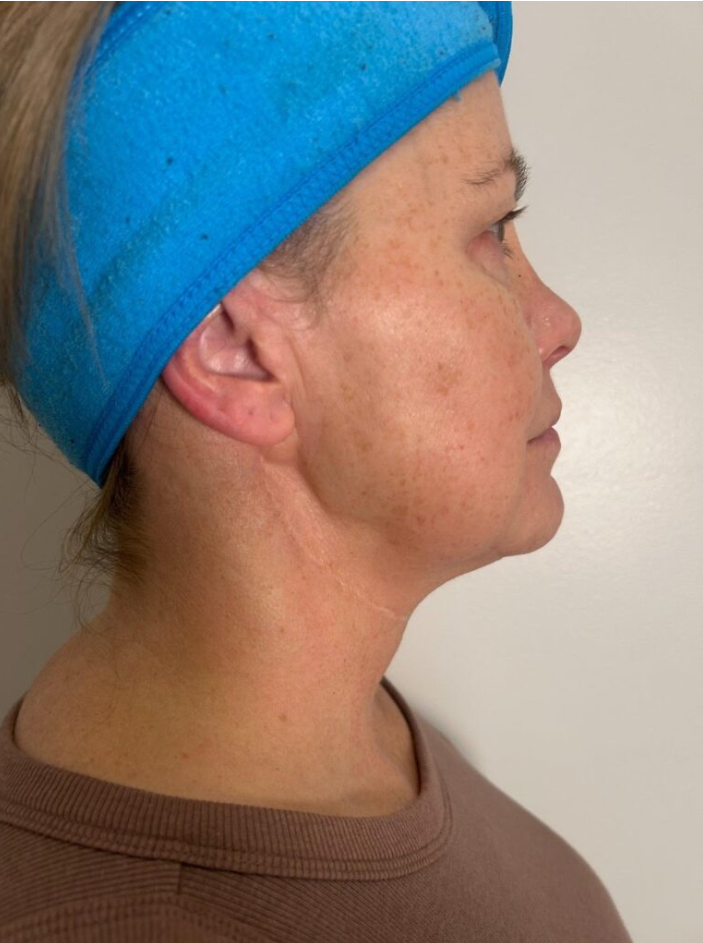
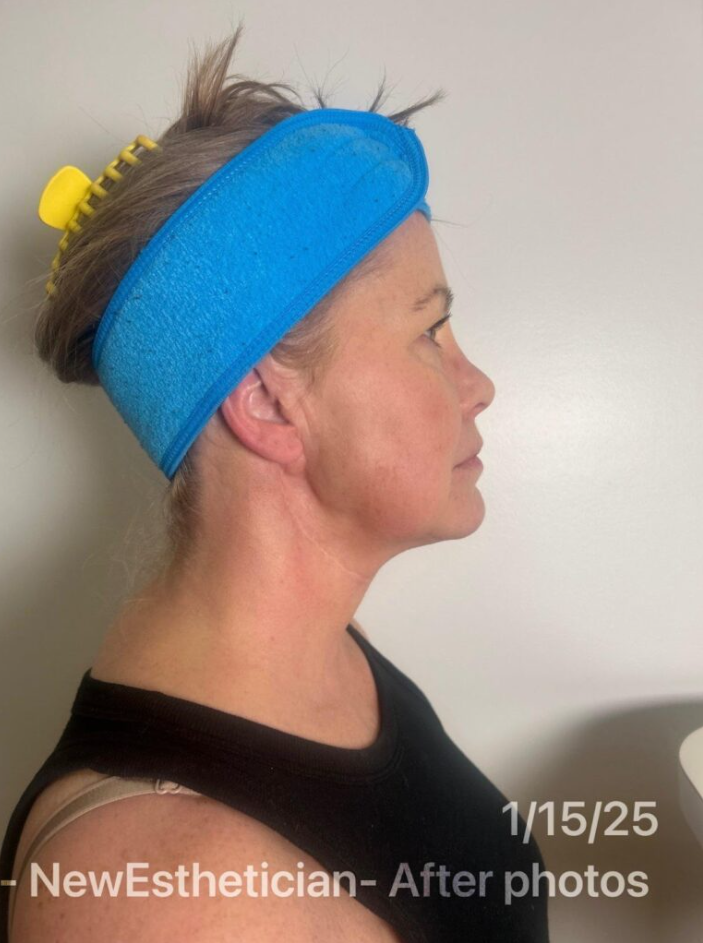
Claire Brokloff works as the in-house esthetician at a physician's office, a setting that offers a unique advantage for cases like Terri's. While Claire operates within a medical environment with access to clinical oversight, she brings a boutique sensibility to her work. She takes time to understand each client's skin, concerns, and goals.
What sets Claire's approach apart is her comprehensive view of skin health. Microchanneling treatments don't happen in isolation. Claire's extensive knowledge of skincare and home care allows her to build protocols that support the healing process between sessions, giving the skin what it needs to respond optimally to treatment.
For scar revision in particular, this holistic approach matters. The treatment creates the opportunity for healing; proper skincare like Procell Step 1 & 2 aftercare helps the skin take full advantage of that opportunity.
Terri's case challenges the assumption that old scars are simply something we have to live with. Procell Microchanneling as a scar revision treatment is often overlooked in favor of more aggressive interventions, but its focus on healing rather than injury represents an increasingly relevant approach. Especially for clients who haven't responded to traditional methods.
For anyone who has written off an old scar as unchangeable, this is worth considering: the capacity for healing doesn't disappear. Sometimes it just needs the right signal to begin again.
_______________
Claire Brokloff is a licensed esthetician specializing in advanced skin treatments. She practices as the in-house esthetician at Akron Highland Oral Surgery, where she works with clients on concerns ranging from aging and texture to scar revision and skin health optimization.